There is no single “best” month for everyone. If you want clear seas and settled sunshine, go between December and March. If you want green forest and full streams, June to November is when the island looks its best, and you have to live with the rain in return. This guide sets the months side by side with data so you can choose what matters to you.
At a glance: three rhythms in a year
- December to March, the dry season: only about 2 to 5% of days bring heavy rain (10 mm or more), and monthly rainfall is 40 to 67 mm.
- April and November, the shoulder months: 10% of days are heavy-rain days in April and 18% in November. The rain is returning (April) or fading (November).
- May to October, the rainy season: 28% to 43% of days see heavy rain, with 234 to 343 mm a month. The peaks are September (343 mm) and October (326 mm).
Temperature hardly changes through the year: roughly 28.5 to 31°C by day and 24 to 26°C at night. What changes is the rain, so choosing a month is really choosing how much rain you can accept. The full 12-month table is in Phu Quoc weather month by month.
December to March: beautiful seas, a busier island
This is the most predictable stretch. Each month has only 2 to 5% heavy-rain days, so beach days, island tours and sunsets rarely need rescheduling. Travel sources usually put the best snorkelling from November to April when the water is clear, and speedboat tours to the southern islands are advised only in the dry season.
The trade-off is that this is also peak season. Around 20 December to 5 January and Lunar New Year, rooms often sell out early and prices are usually at their highest. If you travel then, book several weeks ahead. December also has the strongest wind of the year (about 21 km/h in the data), so afternoons by the sea can feel cooler than you expect.
April and May: hottest, and the rain comes back
April is the hottest month (30.9°C average daytime) but still has only 10% heavy-rain days. In May that figure jumps to 28% and rainfall doubles from April (121 to 234 mm). If you can take the heat and want a quieter island, April is worth considering. From May you need a back-up plan for rainy afternoons.
June to October: the season of forest and streams
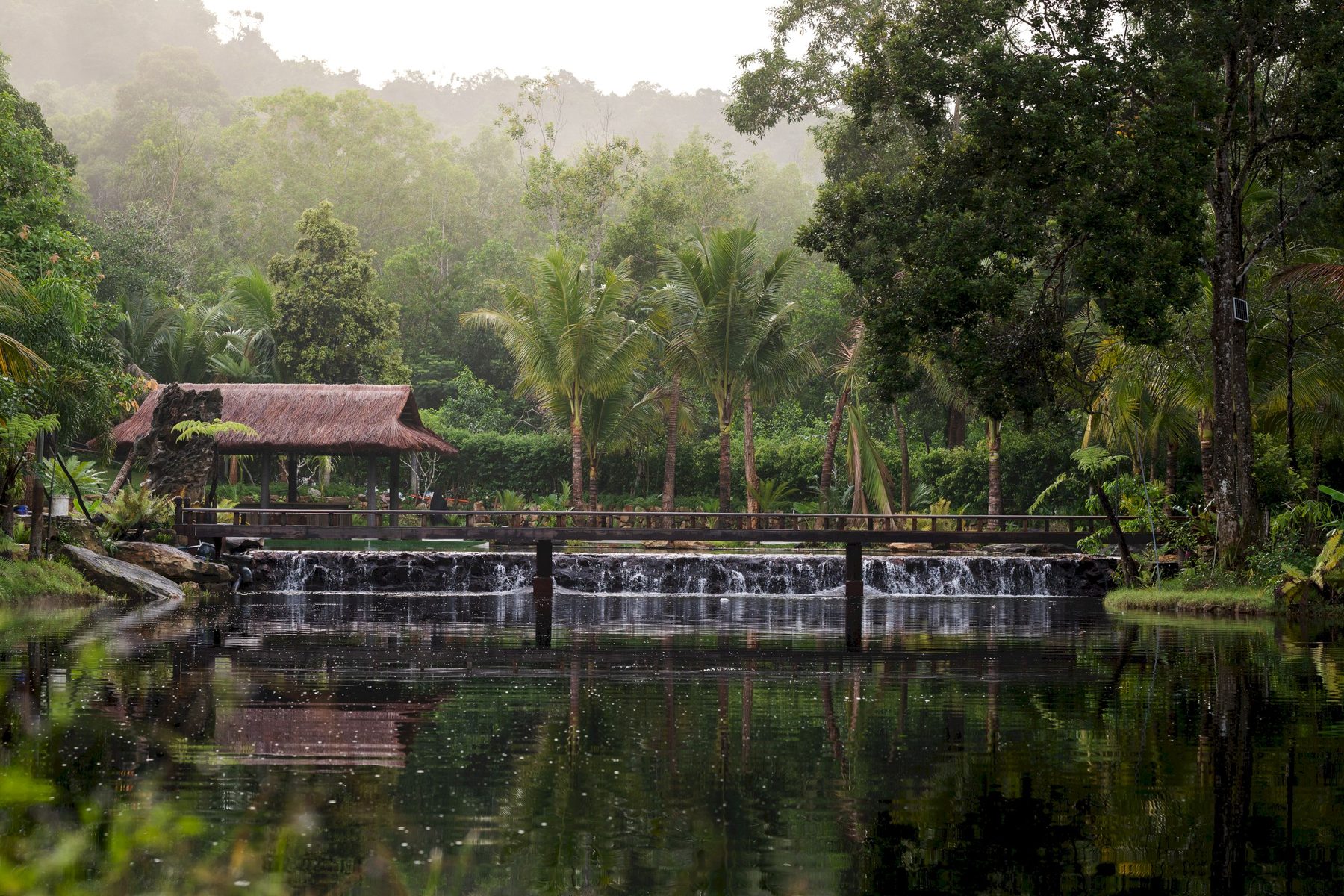
This is when the sea is less settled and many island tours can be cancelled under rough-sea warnings. It is also when the forest is greenest and streams carry the most water. Travel articles rate Suoi Tranh and Da Ban stream at their best from about May to November; in the dry season the water at Suoi Tranh drops a lot.
Rain does not mean every day is a washout: even in September, the wettest month, about 57% of days have no heavy rain. The trick is to keep mornings for the outdoors and afternoons for indoor plans.

November: the shoulder month worth noting
The rain is fading (169 mm, 18% heavy-rain days), the forest is still green, streams still carry water, and the sea starts to settle. Many people find November a pleasant turning point: before the year-end peak, yet sunny enough. It also suits you if you want both streams and beaches in one trip.
Choose the month by purpose
| You want | Consider | Note |
|---|---|---|
| Beaches, snorkelling, island tours | December to March (extend to November and April) | Peak season; book early |
| Streams, waterfalls, the greenest forest | June to November | Go in the morning; rocks by the water are slippery after rain |
| Both sea and streams in one trip | November, or early April | Two shoulder months |
| A quiet stay away from crowds | May to October | Bring a plan for rainy days |
| Travelling with small children, needing a settled schedule | December to March | See the booking policy for holiday periods |
If you choose to stay in the forest: how Rivora changes with the season
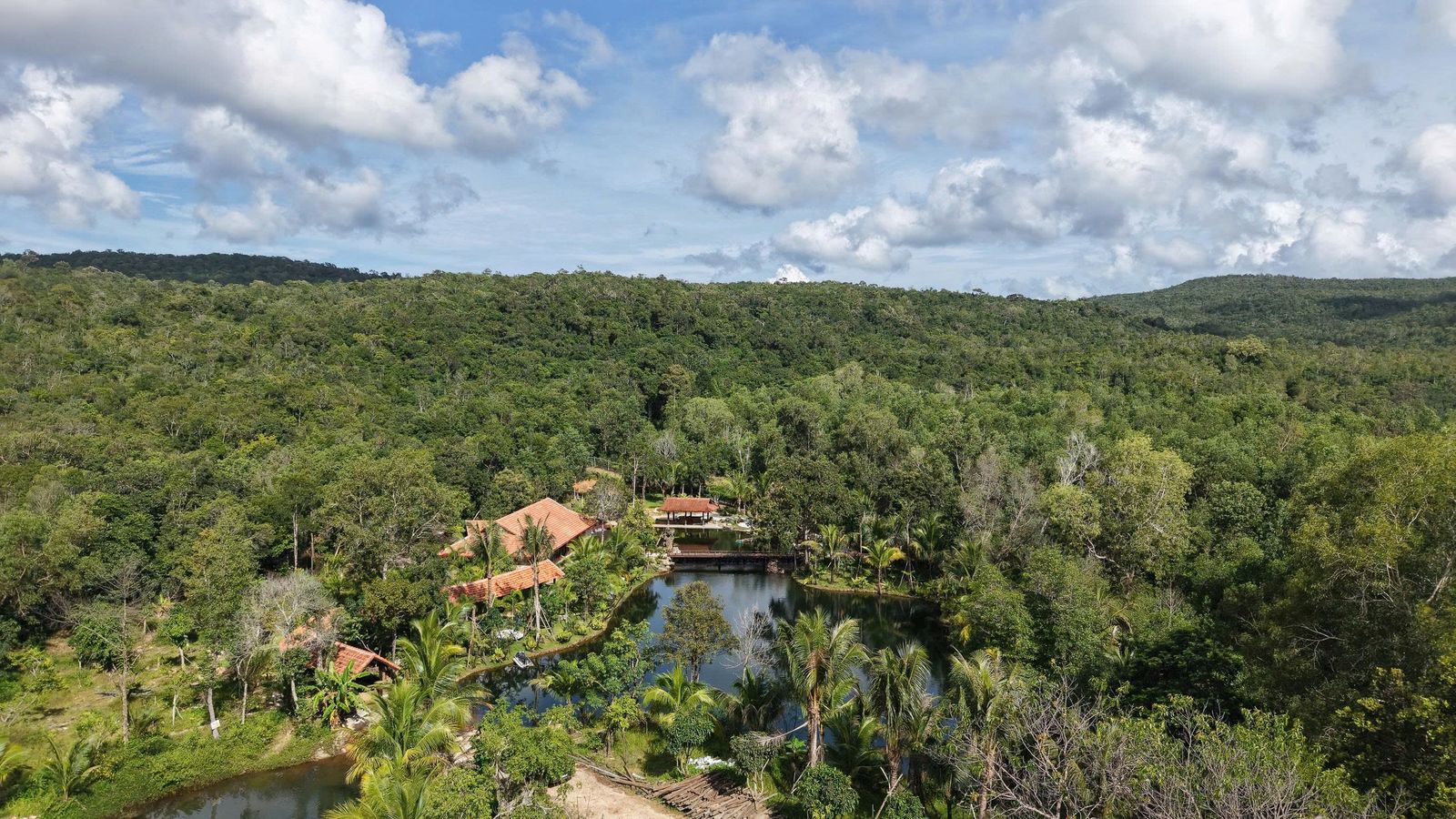
Rivora sits inland in Cua Duong, in the forest beside Da Ban stream, about 14 to over 30 km from the major beaches. So the seasons have two faces here. In the dry season you have sunny mornings for forest walks, then the beach in the afternoon (Sao Beach is about 31 km, roughly 40 minutes by road). In the rainy season the retreat is a place to stay in: listen to rain on the canopy, watch the stream run fuller, and go out only when the sky allows.
Check-in is from 14:00 and check-out at 12:00. The periods 20 December to 5 January, Lunar New Year, 30 April to 1 May and 2 September have their own cancellation policy, which you can read on the booking page. To pick the right room type for the season, see the room types or call the hotline on 0989 748 048.
In short
- Want beaches and a settled schedule: December to March, book early.
- Want green forest, full streams and fewer people: June to November, with a plan for rainy days.
- Want a little of both: November or early April.
Data source: Open-Meteo, ERA5 reanalysis, averaged over 2015 to 2025 at Rivora's coordinates (10.24°N 104.03°E). A "heavy-rain day" is a day with 10 mm of rain or more. ERA5 is model data, so rainfall is usually lower than gauge readings; use it as a relative guide between months, not a forecast for a particular day.